




Australian businesses are competing in a digital environment where customers have more choice, more information and higher expectations than ever. Before someone contacts a company, books a service or makes a purchase, they usually search online, compare providers, read reviews, visit websites and look for proof that a business can deliver. Every digital interaction influences trust.
This means growth is no longer created by one marketing channel alone. A business may need stronger search visibility, a better website, more effective paid advertising, improved ecommerce performance or a clearer customer journey. The strongest digital results usually happen when these elements work together as one connected system.
For companies looking to grow in New South Wales, working with a marketing agency Sydney businesses can trust may help bring structure to a competitive digital market. Sydney customers often compare several providers before making a decision, so brands need to communicate value clearly across search, website pages, advertising and social channels.
A strong marketing strategy should begin with clear commercial goals. Some businesses want more qualified leads. Others want stronger ecommerce revenue, better local visibility, improved brand awareness or more efficient advertising spend. Once the goal is clear, the right mix of channels can be selected and measured properly.
The idea of choosing the best digital marketing agency should not be based only on who offers the most services or the lowest price. The right agency should understand the business model, customer journey, competitive landscape and commercial outcomes that matter. It should be able to connect strategy, creative, technology and performance rather than treating each activity as a separate task.
A good agency should also focus on accountability. Traffic, impressions and clicks can be useful, but they do not tell the full story. Businesses need to understand which channels are generating enquiries, sales, calls, bookings and meaningful opportunities. Clear reporting helps teams invest with more confidence and improve performance over time.
Website experience sits at the centre of this strategy. A website is often where customers decide whether a business feels credible, professional and relevant. If the site is slow, unclear or difficult to use, marketing investment can be wasted. This is why working with a technical web agency can help businesses build a stronger digital foundation.
Web development is about more than writing code. It involves building a platform that supports marketing, sales and operations. A service-based business may need enquiry forms, CRM integration and landing pages. An ecommerce brand may need product filtering, checkout optimisation, inventory syncing and payment gateway integration. A B2B company may need gated content, automation and analytics.
Technical performance affects every channel. Slow loading pages can reduce conversion rates from paid ads. Broken forms can lose valuable enquiries. Poor mobile usability can frustrate users coming from social media or search. Weak site structure can limit SEO performance. Strong development creates the foundation that allows every marketing channel to work harder.
Design is equally important. A visually strong website can build confidence quickly, but the design also needs to support the customer journey. A design-focused web agency can help create pages that are clear, professional and easy to navigate. Visitors should understand what the business offers, why it is credible and what step they should take next.
Good website design should reduce friction. Navigation should feel simple, content should be easy to scan and calls-to-action should be visible without feeling aggressive. Many customers first visit from a mobile phone, so the experience needs to feel smooth across devices. A website that looks good but fails to guide users clearly may still underperform.
Paid search can then bring qualified visitors to the website quickly. A specialist AdWords agency can help businesses reach customers who are actively searching for relevant products, services or solutions. Although the platform is now commonly known as Google Ads, many businesses still refer to it as AdWords, and the purpose remains the same: capture demand when intent is high.
Google Ads can be valuable for lead generation, ecommerce sales, local services, product launches and competitive search markets. However, strong results require more than setting a budget and selecting keywords. Campaign structure, negative keywords, ad copy, bidding strategy, conversion tracking and landing page quality all influence performance.
The best paid search campaigns are built around customer intent. Someone searching for urgent support may need a direct call-to-action. Someone comparing providers may need proof, case studies or a clear value proposition. Sending every user to the same generic page can reduce results. Matching the campaign, message and landing page to the customer’s stage of decision-making can improve conversion quality.
Ecommerce businesses face their own digital challenges. Online stores need to attract shoppers, help them find the right products and make checkout simple. Working with an ecommerce agency can help retailers improve the full buying journey, from product discovery through to purchase.
A strong ecommerce website should be fast, easy to navigate and built around how customers shop. Category pages should be clear. Product pages should answer common questions. Search and filtering should help users find relevant items quickly. Checkout should feel simple and trustworthy. Delivery, returns and payment information should be easy to find.
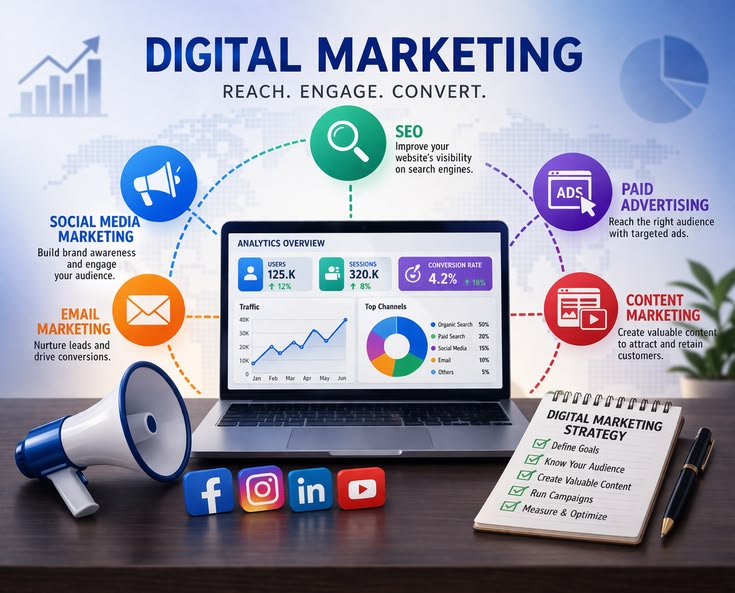
Ecommerce performance also depends on marketing integration. SEO can bring shoppers to category and product pages. Google Ads can target high-intent searches. Social media can build product awareness and remarketing audiences. Email marketing can recover abandoned carts and encourage repeat purchases. Analytics can show which products, channels and campaigns are creating the strongest return.
The most successful digital strategies connect these moving parts. Website design supports trust. Web development supports performance and scale. Paid search creates fast visibility. Ecommerce optimisation improves the buying experience. A broader marketing agency brings these areas together around clear business goals.
This connected approach also helps reduce wasted budget. There is little value in driving paid traffic to a weak landing page. There is limited value in building a beautiful website if customers cannot find it. There is little value in attracting ecommerce visitors if the checkout experience creates friction. Each part of the digital ecosystem needs to support the others.
For Australian businesses ready to grow, the opportunity is clear. Customers are already searching, comparing, clicking and deciding online. Brands that appear with relevance, communicate clearly and provide a smooth experience are more likely to turn attention into enquiries and sales.
Digital growth is not about doing more activity for the sake of visibility. It is about building a practical system that helps customers move from discovery to trust and from trust to action. With the right mix of marketing strategy, website development, design, paid search and ecommerce expertise, businesses can build a digital presence that supports sustainable commercial growth.